The Heraion of Samos is one of the most significant archaeological sites in Greece and a powerful reminder of the island’s importance in the ancient world. Dedicated to Hera, the queen of the Olympian gods, this vast sanctuary played a central role in religious, political and cultural life for over a thousand years.
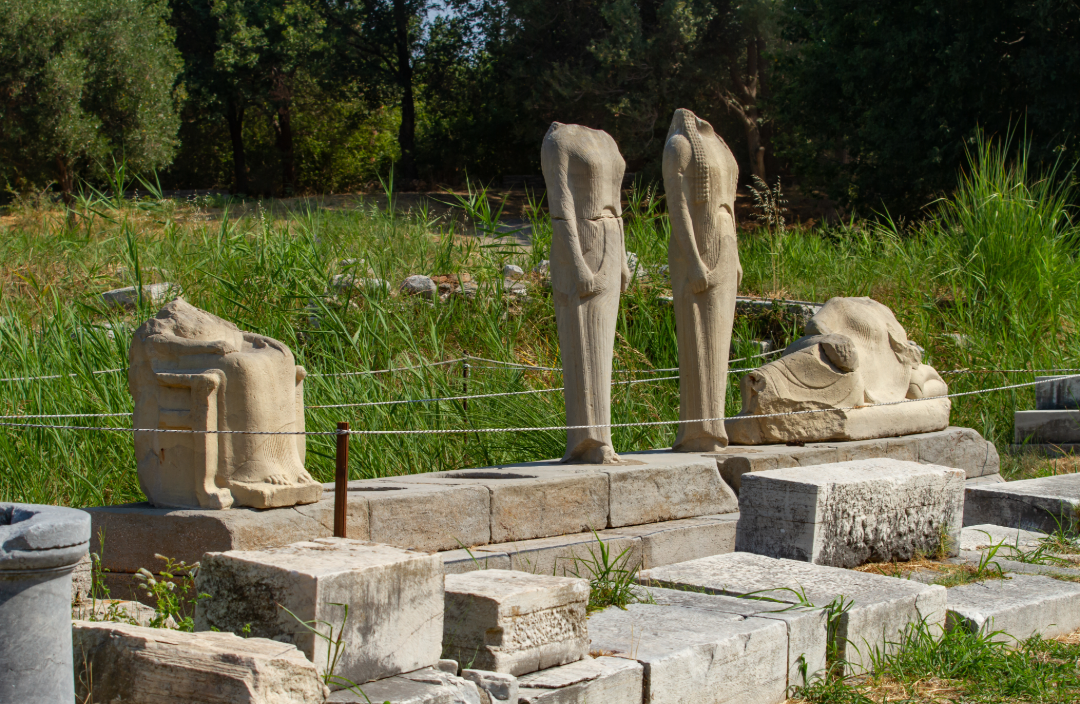
Located in the fertile plain near the mouth of the Imbrasos River, the Heraion was a major place of worship from prehistoric times through to the Roman period. Today, visitors can walk among the remains of monumental temples, altars and votive offerings that once attracted pilgrims from across the ancient Greek world.
Visiting the Heraion of Samos offers a unique opportunity to explore the scale and ambition of ancient Greek architecture. The sanctuary was home to some of the largest temples ever built in Greece, including the legendary Archaic temple that was considered a marvel of its time.
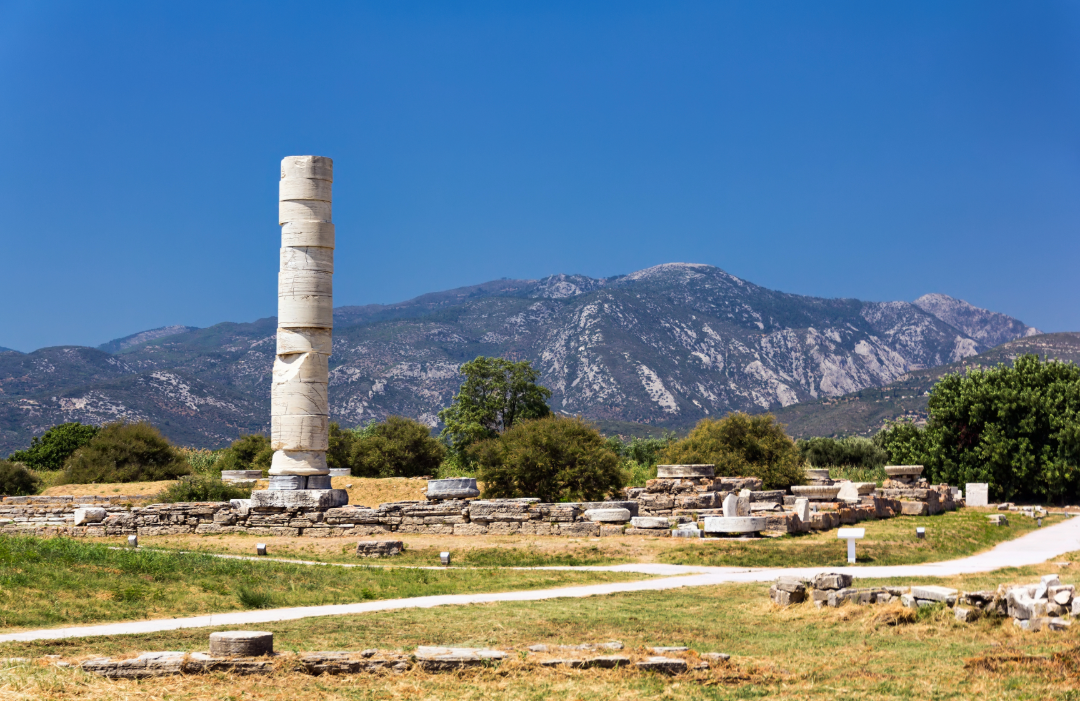
Although only a single column remains standing today, it powerfully conveys the original size and grandeur of the site. The surrounding ruins, foundations and scattered architectural fragments allow visitors to imagine the immense complex that once stood here.
The sanctuary was dedicated to Hera, goddess of marriage and family, who according to myth was born on Samos. Over the centuries, several temples were built on the site, each larger and more elaborate than the last. The most famous structure, begun in the 6th century BC, was one of the earliest examples of monumental Ionic architecture.
Worship at the Heraion extended beyond the temple itself. Processions, festivals and offerings formed part of an active religious landscape, making the site not just a temple, but a vibrant centre of communal life.
The Heraion of Samos is listed as a UNESCO World Heritage Site in recognition of its outstanding universal value. Alongside the nearby ancient city of Pythagoreion, it represents the political power, artistic achievement and spiritual life of ancient Samos.
The site provides valuable insight into early Greek engineering, city planning and religious practices, making it especially rewarding for visitors with an interest in history and archaeology.
The Heraion is located on the south coast of Samos, a short distance from Pythagoreion. It is easily reached by car, taxi or organised tour, and is often combined with a visit to nearby archaeological sites and beaches.
Many visitors explore the area alongside highlights such as Pythagoreion or plan their itinerary using our guide to things to do in Samos.
The best time to visit the Heraion of Samos is during the morning or late afternoon, when temperatures are cooler and the light brings out the textures of the stone ruins. Visiting earlier in the day also allows for a quieter, more reflective experience.
Comfortable footwear, sun protection and water are recommended, as the site is open and expansive with limited shade. Taking time to explore slowly allows you to fully appreciate the scale and historical importance of this ancient sanctuary.
For official cultural and travel information about Greece, you can visit the Greek National Tourism Organisation.
Whether you are a history enthusiast or a curious traveller, the Heraion of Samos offers a powerful connection to the ancient world and remains one of the island’s most meaningful and atmospheric places to explore.
The Heraion of Samos is located on the south coast of the island, near the ancient city of Pythagoreion. Set in a wide, open landscape close to the sea, the sanctuary occupies a historically significant position linked to ancient trade routes and religious processions.
The site is easily accessible and is often visited as part of a wider cultural itinerary exploring Samos’s archaeological and historical landmarks.


One of the lesser known regions of Greece, Eastern Macedonia and Thrace has many attractions that make it an appealing destination for a holiday.